


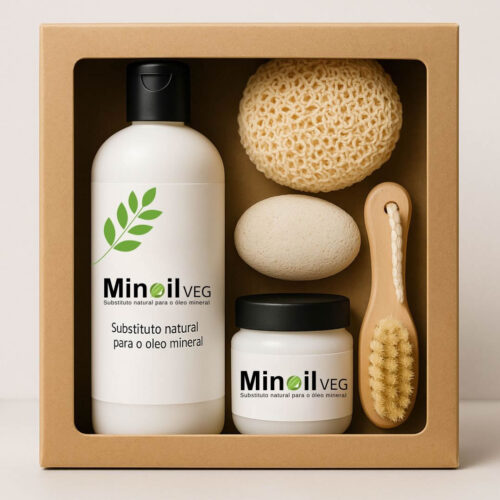
Alternative to Mineral Oil: The Definitive Guide to Natural Substitutions for the Cosmetics Industry
For decades, mineral oil (liquid paraffin, petrolatum) reigned supreme on laboratory benches. It was cheap, stable, inert, and provided the occlusion that protected the skin. But the wind has changed. The modern consumer looks at the label and, upon seeing petroleum derivatives, returns the product to the shelf. The movement Clean Beauty This has transformed mineral oil from a "functional hero" into an "environmental villain." For you, the formulator or production manager, this creates a technical and commercial dilemma: how to replace such a versatile ingredient without breaking the budget or losing sensory performance? The good news is that green technology has evolved. Finding a alternative to mineral oil It's no longer just about being "eco-friendly"; it's about delivering a superior, biocompatible product with a story that sells. Let's explore how to make this transition safely and effectively.
Why is the industry abandoning mineral oil?
Let's be pragmatic. Mineral oil works. It creates an inert barrier that prevents transepidermal water loss (TEWL). So why the rush to replace it?
The answer has three pillars: consumer, environment and physiology.
Today's consumer associates petroleum with pollution and toxicity (although cosmetic grade is safe). Environmentally, it is a non-renewable resource and difficult to biodegrade. But the most interesting point is the physiological one: mineral oil is... inertIt “sits” on the skin, but doesn’t nourish it. It doesn’t deliver vitamins, it doesn’t have essential fatty acids, and it doesn’t interact with skin biology. The brands that lead the market today want ingredients that do. more Rather than just occluding, they want ingredients that treat the condition.
What Do We Need to Replace? Understanding the Technical Function
Before choosing the alternative to mineral oilWe need to dissect what it does in its current formula. Generally, it is used for:
Emollient and Glide: That feeling of easy spreadability.
Occlusion: To form a film that retains moisture.
Makeup Removal: To dissolve pigments and waxes (in cleansing oils).
Stability: It doesn't oxidize, it has no smell, and it doesn't change color.
Your alternative must meet these requirements. Replacing "one for one" doesn't always work. Often, we use a blend of vegetable oils and esters to mimic the exact profile of the mineral.
Analogy of "Plastic Film vs. Smart Fabric"
To explain the difference to your marketing team (or to the end consumer), use this analogy:
O Mineral Oil It's like wrapping the skin around a plastic filmIt is extremely efficient at preventing water from escaping. However, it suffocates, doesn't allow the skin to "breathe" (gas exchange), and adds nothing to the structure.
THE Plant-Based Alternative (Oils and butters) is like dressing the skin with a high-tech smart sports fabricIt protects and retains moisture, but is permeable, allowing the skin to breathe. And, most importantly, the fabric is impregnated with nutrients that the skin absorbs and uses to regenerate. It's protection. with treatment.
Refined Vegetable Oils: The First Line of Defense
The most direct substitute for mineral oil is vegetable oils (triglycerides). However, not all oils will do. To mimic mineral oil, we look for oils with... high oxidative stability and a less "sticky" sensory experience.
Sweet Almond Oil: A classic. Good glide, affordable, but requires antioxidants.
Sunflower Oil (High Oleic): The version rich in oleic acid is much more stable than cooking sunflower oil and offers excellent value for body products (large volume lotions).
Grape Seed Oil: Lighter, drier feel, excellent for the face.
Pro Tip: For mass-produced products where cost is critical, refined vegetable oils are the best option. They lose some of their bioactive compounds and color, but gain in odor standardization and stability, approaching the neutrality of mineral oil.
The Revolution of Esters and Emollients of Green Origin
If you need that "dry" and velvety feel that some lightweight paraffins or silicones deliver, pure vegetable oils can seem "heavy" or greasy. That's where... Esters.
They are obtained through "Green Chemistry" (reaction of a natural fatty acid with a natural alcohol).
Coco-Caprylate/Caprate: Often called "vegetable silicone." It spreads very quickly and has a dry, silky feel. It is the alternative to mineral oil Perfect for facial creams, sunscreens, and makeup.
Dicaprylyl Carbonate: Another emollient with an ultra-dry feel and fast absorption.
These ingredients allow for the formulation of products. oil-free (no sensory) that are still 100% natural.
Pracaxi Oil: The “Natural Silicone” of Brazilian Biodiversity
Here at Maian, we are passionate about biodiversity. If you want to replace mineral oil (or silicones) in hair or other products... skincare high performance, the Pracaxi Oil It's unbeatable.
Why is it special? It has the highest natural concentration of Behenic acidThis fatty acid creates a hydrophobic (water-repellent) film around the hair strand or on the skin.
In the Hair: It seals the cuticle, provides a mirror-like shine, and controls frizz, acting exactly like a silicone or mineral oil, but nourishing the hair fiber.
On the Skin: It provides a velvety, healing touch without the excessive occlusive effect of petroleum.
It is an alternative that brings the storytelling From the Amazon to your label.
Plant-Based Squalane: The Premium and Biomimetic Alternative
For luxury or dermocosmetic lines, the Squalane (usually derived from olives or sugar cane) is the gold standard.
Human sebum naturally contains squalene. Plant squalane is the stable form of this molecule. Therefore, it is... biomimeticThe skin recognizes it immediately and absorbs it.
Unlike mineral oil, which is foreign to the body, Squalane restores the body's natural lipid barrier. It is completely transparent, odorless, incredibly stable, and has a "liquid silk" feel. It's the perfect replacement for anti-aging facial formulas.
Jojoba Oil: The Liquid Wax That Fools the Skin
Technically, jojoba is not an oil, it's a liquid waxIts molecular structure is almost identical to that of human sebum.
As alternative to mineral oilJojoba oil stands out for its stability. It hardly oxidizes (doesn't become rancid) and withstands high temperatures. This makes it ideal for formulations that require heating or a long shelf life. Furthermore, being a wax, it forms an excellent non-occlusive protective film, offering the "protection" that mineral oil lovers seek, but with a dry touch.
Formulation Challenges: Stability and Oxidation (Rancidity)
The biggest "advantage" formulator has when using mineral oil is that it's immortal. You can leave the bottle open for a year and it will be the same. Natural oils are alive. They react with oxygen, light, and heat.
When making a substitution, you need to protect your formula:
Antioxidants: It is mandatory to add Vitamin E (Tocopherol) or Rosemary Extract to the oil phase to prevent rancidity.
Chelating Agents: To sequester metal ions that accelerate oxidation.
Packaging: Dark bottles or airless They help a lot.
If your product has a very long shelf life (3+ years), the choice of oils should fall on the most stable ones (Jojoba, Shea Butter, Fractionated Coconut Oil) instead of sensitive polyunsaturated oils (such as Rosehip).
Sensory Comparison: Dry Touch vs. Occlusive Touch
A common mistake is replacing mineral oil with a heavy vegetable oil (such as castor or avocado) in a cream for oily skin. The customer will complain.
To replace Light Liquid Paraffin (Dry Touch): Use Esters (Coco-Caprylate), Squalane, or Grape Seed Oil.
To replace Solid Vaseline/Petrolatum (Heavy Touch/Protective): Use vegetable butters (shea, cupuaçu) or avocado oil. Cupuaçu, in particular, has a higher water absorption capacity than lanolin, making it a much more potent moisturizer than petroleum jelly.
The secret lies in fatty acid profileShort- or medium-chain fatty acids provide a dry feel; long-chain fatty acids provide protection and smoothness.
The Impact on Formula Cost and Perceived Value
Let's talk about money. Yes, mineral oil is much cheaper than any quality vegetable oil. If you're only considering the cost per kilogram (R$/kg) when making the substitution, the math doesn't add up.
You need to change the equation to Perceived Value.
A cream with "Liquid Paraffin" is a commodity Inexpensive. A cream with "Amazonian Pracaxi Oil and Squalane" is a high-value cosmetic. premium It's sustainable. You can (and should) charge more for the final product. The substitution pays for itself through brand repositioning and a higher margin on the finished product.
Sustainability as a Selling Point (Marketing)
Substitution is a powerful marketing tool. By eliminating mineral oil, you unlock... claims (claims) that consumers actively seek:
Petrolatum-Free / Mineral Oil-Free: It signifies purity.
Biodegradable: It does not pollute the oceans after bathing.
Renewable: It comes from plants that grow year-round, not from fossil fuels.
Vegan / Plant-Based: It aligns with modern ethics.
Use this in your campaigns. Show that your brand cares about what the skin absorbs and about the planet.
How Maian Helps with the Transition of Your Formula
Making the transition from synthetic to natural formulas can be daunting. Issues with stability, color change, and texture are real.
In MaianWe don't just sell the ingredient. We act as technical consultants.
We help you choose the alternative to mineral oil correct for the your Product type (hair, body or face).
We offer options from Brazilian biodiversity that give your product an identity.
We guarantee the quality and stability of batches with rigorous certifications (ISO 9001).
Don't trade the sure thing for the uncertain. Trade the obsolete for the innovative, with the confidence of someone who understands the subject.
Conclusion
The search for a alternative to mineral oil This is not a passing trend; it's the natural evolution of the cosmetics industry. The future belongs to biocompatible formulas that respect skin physiology and the environment. Although the technical challenge of stability and cost exists, current options ranging from technological esters to precious Amazonian oils allow for the creation of products that far surpass the performance of old paraffin. Your brand gains in... storytelling...in effectiveness and in connecting with the consumer. And remember: you don't have to navigate this alone.
Looking to modernize your formulations with high-performance natural ingredients? Speak to the Maian technical team. and discover the ideal replacement for your project.
Frequently Asked Questions (FAQs)
1. Is the plant-based alternative to mineral oil comedogenic (does it clog pores)?
It depends on the oil chosen. Mineral oil is non-comedogenic, which is an advantage. However, many plant-based alternatives also don't clog pores. Oils like jojoba, grapeseed, and sunflower have a low degree of comedogenicity and are safe for oily skin. Coconut or wheat germ oil, on the other hand, should be avoided on the face of those with acne.
2. Does the substitution significantly increase the final product cost?
Yes, the cost of raw materials will be higher. Mineral oil is extremely cheap. However, the use of vegetable oils adds value to the product, allowing you to charge a higher final selling price. Furthermore, you often need... less Vegetable oil is needed to achieve a real nutritional result, rather than mineral oil, which would only provide occlusion.
3. How can I prevent the product from developing a rancid smell when using vegetable oils?
Rancidity is caused by oxidation. To avoid it, you should: 1) Choose oils with good oxidative stability (such as jojoba or medium-chain triglycerides); 2) Add a robust antioxidant system to the formula, such as Vitamin E (Tocopherol) or Rosemary Oleoresin; 3) Use packaging that protects from light and air.
4. Is there a plant-based alternative that has a dry feel similar to lightweight paraffin?
Yes. The Esters (such as Coco-Caprylate/Caprate) and the Vegetable Squalane These are the best options. They have molecular chains designed to spread quickly and absorb, leaving a silky and velvety feel, without the greasy sensation typical of some crude natural oils.
5. Can I substitute mineral oil with vegetable oil in the same ratio (1:1)?
Not always. Mineral oil is very inert and does not interact with the emulsion in the same way as vegetable oils (which have different polarity). By making a 1:1 exchange, you can alter the viscosity or stability of the emulsion. It is recommended to perform bench tests and often adjust the emulsifying system to ensure the stability of the cream.